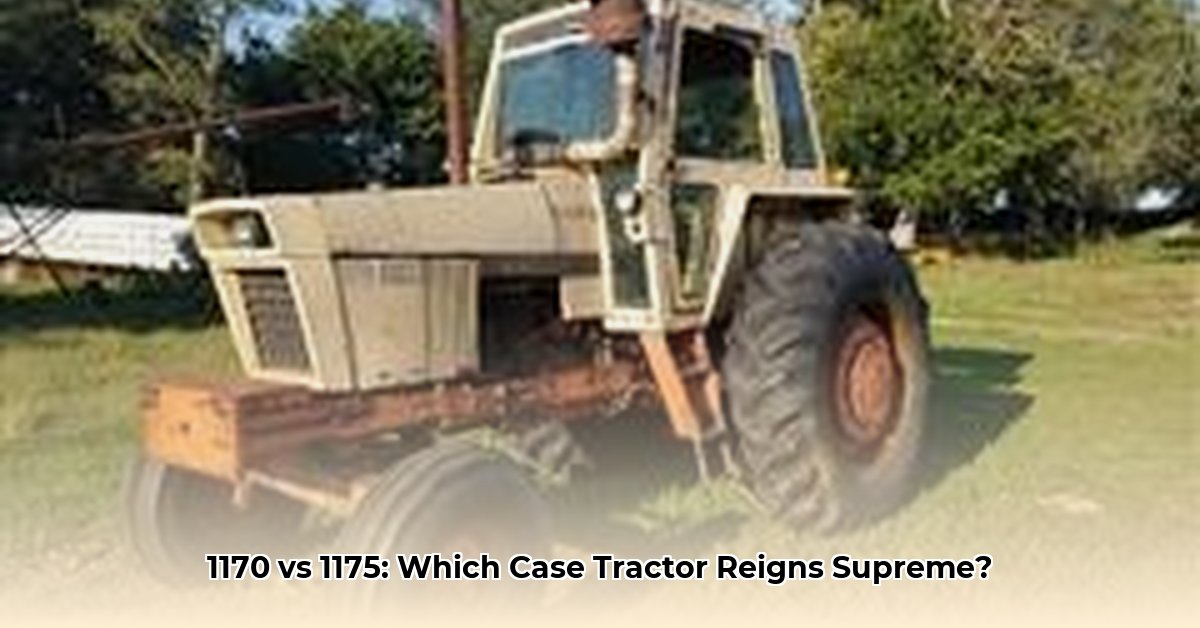
Choosing between a classic J.I. Case 1170 and 1175 tractor can feel daunting. Both are powerful machines, but understanding their nuances is crucial for making the right choice. This comparative review delves into their strengths and weaknesses, helping you decide which vintage workhorse best suits your needs. For more Case tractor information, check out this helpful resource: Case Tractor Info.
Under the Hood: Engine and Power
Both the 1170 and 1175 tractors are powered by the robust Case 451 turbocharged engine, delivering approximately 122 PTO horsepower (power takeoff horsepower – the power available to run implements). This substantial power is sufficient for a wide range of agricultural tasks. Their large, 50-gallon fuel tanks allow for extended operation without frequent refueling. While fuel efficiency is comparable, the difference in reliability lies elsewhere. Isn't fuel efficiency a key concern when considering the overall running costs of vintage machinery?
Transmission: A Tale of Two Approaches
Here’s where a key divergence emerges. The 1170 offered an optional powershift transmission (an automatic transmission system), a technologically advanced feature for its time. However, online forum discussions reveal some owners experienced complexities and costly repairs with this system. "The powershift, while convenient, proved troublesome for some," notes Robert Miller, a vintage tractor restoration expert from the Midwest Agricultural Heritage Society. In contrast, the 1175 employed a simpler, more robust 8-speed manual transmission— a more straightforward design generally associated with lower maintenance demands, according to numerous owner accounts.
Cooling System: Temperature Control
The 1170's cooling system has drawn some attention. Several owners reported overheating, particularly during prolonged periods of heavy work such as deep plowing. This issue appears less prevalent in the 1175, hinting at a potential design improvement in the later model. For heavy-duty applications, a reliable cooling system is paramount; wouldn't you agree?
Head-to-Head Comparison: Key Differences
This table summarizes the critical differences between the Case 1170 and 1175 tractors:
| Feature | 1170 Case Tractor | 1175 Case Tractor |
|---|---|---|
| Engine | Case 451 Turbocharged | Case 451 Turbocharged |
| Transmission | Optional Powershift; Straight 8-speed also available | Straight 8-speed |
| Cooling System | Some reported overheating issues under heavy loads | Generally better cooling performance reported |
| Transmission Reliability | Potentially higher maintenance needs | Generally lower maintenance needs reported |
Pre-Purchase Inspection: Essential Steps
Before buying either tractor, a meticulous pre-purchase inspection is non-negotiable. Pay close attention to the transmission and cooling system, checking for leaks, worn components, and unusual noises. Remember, these are vintage machines; preventative maintenance is crucial for longevity.
Parts Availability: A Long-Term Consideration
Parts availability for both tractors varies regionally. Research your local market to gauge accessibility and costs before purchasing. This foresight will prevent potential future headaches.
Community Resources: Tap into Collective Knowledge
Online forums, such as Newagtalk, are invaluable resources. Experienced owners and mechanics readily share insights, repair tips, and parts sourcing information. Leveraging this collective experience is highly recommended. Service manuals and parts catalogs also provide crucial technical information. Don't underestimate the power of community knowledge – it can save you time, money, and frustration.
The Verdict: Choosing the Right Tractor for You
The "better" tractor depends entirely on your priorities and usage. The 1170's powershift, while potentially complex, might offer a smoother driving experience for some. The 1175's simpler manual transmission prioritizes reliability and ease of maintenance. Carefully evaluate your operational needs and comfort level with potential repairs to make the optimal decision.
How to Choose Between a J.I. Case 1170 and 1175
Key Takeaways:
- The 1175 incorporated improvements over the 1170, but some debate its durability.
- Both tractors offered excellent power and (relatively) good fuel efficiency for their era.
- The 1175's 8-speed manual transmission contrasts with the 1170's optional powershift.
- Consider your intended use, parts availability, and potential restoration costs.
Engine and Transmission: A Detailed Comparison
Both the 1170 and the 1175 were designed as workhorses capable of handling heavy tasks, and their engines and transmissions reflected this. The 1175 featured a robust 7.4L six-cylinder diesel engine, producing over 120 PTO horsepower and demonstrating relatively impressive fuel efficiency for a tractor of that size. Although fuel efficiency is broadly similar between the two, reported figures vary significantly among various sources and tractor conditions.
The 1170's engine specifications have proved less consistently documented across sources, and the details surrounding the transmission availability and type for the 1170 are similarly uncertain, making thorough research before purchase even more critical.
Design and Durability: A Matter of Perspective
The 1175, designed for improved efficiency, incorporated weight-saving modifications compared to the 1170. However, some enthusiasts argue that these changes compromised durability. This remains a subject of ongoing debate. In contrast, the more substantial build of the 1170 is often cited as a potential advantage for increased longevity. This difference in design philosophy becomes a key consideration, particularly for those frequently using their tractors on demanding tasks. The 1175 also featured planetary gear systems in the rear axle, offering enhanced performance and handling compared to the earlier model. Both, however, shared the open-station design common to tractors of that era, lacking the weather protection and comfort features of later models with optional cabs and air conditioning.
Choosing Your Tractor: Practical Considerations
The following table offers a practical overview of factors to consider:
| Feature | Case 1170 | Case 1175 | Considerations |
|---|---|---|---|
| Engine | Engine specifications are inconsistently documented | 7.4L 6-cylinder diesel, >120 PTO hp | Thoroughly investigate each specific tractor's condition. |
| Transmission | Transmission type uncertain; may include powershift | 8-speed Manual | Assess your need for a powershift transmission. |
| Weight/Durability | Potentially heavier and more robust | Lighter, potentially less durable | Evaluate your need for agility versus long-term robustness. |
| Parts Availability | Parts availability depends on location and market | Parts availability depends on location and market | Factor in the cost and potential difficulty of sourcing parts. |
Remember, the best tractor for you hinges on a number of personal factors. Consider your budget, anticipated workload, and comfort level with potential maintenance and repair needs. Both the 1170 and 1175 are capable machines, but understanding their distinct characteristics is essential for making an informed purchase.